JJ and I went to a training on Friday night and Saturday presented by Paul L. Henderson, J.D., LTC (ret.) US Army, on how to help vets with post traumatic stress (PTS) adjust to civilian life once they leave the military. Even though JJ is not a combat vet and does not have PTS (for which I am eternally grateful), I still learned a great deal about him related to his military service over the course of the weekend. The timing of this class was rather ideal as JJ’s retirement date is now just a few months away.
One of the things that struck me during the class were the number of words used that started with “de.” Deployment, detachment, demolition, DMZ (demilitarized zone), defined. The prefix “de” is defined by Dictionary.com as “used to indicate privation, removal, and separation, negation, descent, reversal, intensity.” With military service, there is an inherent level of separation (from your family, civilian life, creature comforts, among other things) upon joining. Depending on which branch and what kind of job you are trained for, there can also be separation from a prior moral compass and sometimes even from yourself in order to get the job done.
As a civilian, who lives in the United States, while society today certainly has a much greater respect and appreciation for our military, it is still very easy to feel detached from those that serve since (for the most part), the war of the past 17 years has been fought on foreign soil. In high school, I can remember watching bombs exploding on a green screen on the TV news feeds of Desert Storm in the 1990s and not knowing how to process what was going on half a world away.
Almost thirty years later, I feel only slightly more connected to the military, even being married to someone who serves. I filled out a survey a few months ago, part of which asked about my experience with military service. Despite the fact that JJ has been in the military for 11 of our 14 years of marriage, I have not considered myself a true “military spouse.” Yes, I have gotten used to him being gone one weekend a month and two weeks a year, but I have never felt like he was going somewhere that was dangerous or that he might not come home and I have not had the experience of having my spouse be gone for six, twelve, even eighteen months at a time, with the possibility of not knowing exactly where he was stationed. My hat is off to service members who deploy and to their spouses who learn to live with those conditions for a few years of an initial commitment and especially to those who do so for the length of a full 20+ year career.
When a vet comes home (after whatever length of service), the “de” words turn into “re” words; reenter, reestablish, reintegrate, retire. The prefix “re” according to Merriam-Webster means “1 : again : anew. 2 : back : backward.” If the vet went straight into the service out of high school (either enlisted or to one of the Academies), they don’t have much frame of reference of a life to go back to. All they have known as an adult is the military – they are defined (back to a “de” word) by who they became while they were in – their sense of purpose and belonging, their community, is tied up in this group of people who are separated from society. Their vocabulary is different, their customs are different, they are bonded to the people in their unit (another word that very sterile, separate) in ways that cannot be duplicated with even the best of their civilian friends or frequently even family members. Many times a vet will “re-up” to return to an environment that makes sense to them, an environment that may hold some of their worst, as well as their best memories.
JJ returned to the military with an enlistment in the Reserves seven years after leaving active duty. Our decision to do so was primarily for the retirement benefits in the future, but he talks fondly about parts of his experiences in active duty that he was unable to duplicate elsewhere during those seven years. He has told me that he had a greater challenge transitioning to civilian life after active duty in 2000 than he anticipates doing so when he retires in August. I’m not naïve enough to think that there won’t be some period of adjustment for us both; he says he will miss the people and the comradery the most. For me, I think it will be strange having him around every weekend. I’ll likely adjust more quickly than will he.
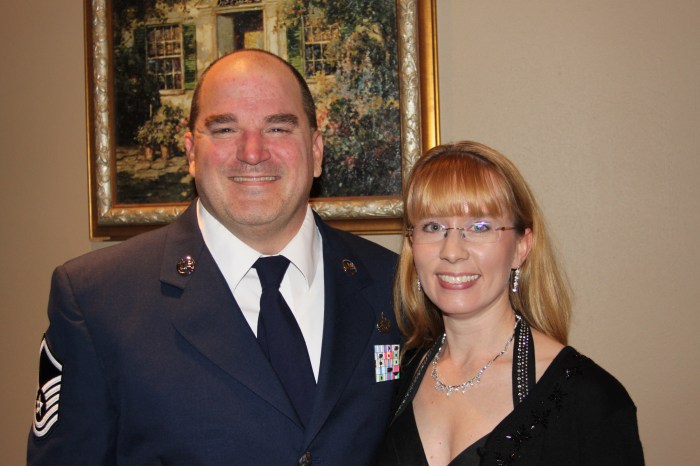
This photo is a few years old and is the most recent one I have of the two of us with him in uniform. He does look great in his dress blues!
For more information on the program for returning vets, go to www.soldiersheart.net or contact Lt. Colonel Henderson. His bio and contact information are below.
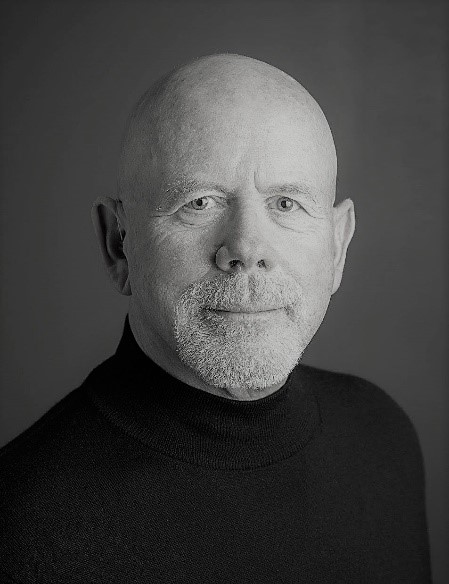
Paul L. Henderson, J.D., LTC (ret.) US Army, is a combat veteran who served in Vietnam with the 101st Airborne Division during 1969 – 1970. He was later commissioned and graduated from the Special Forces Qualification Course. He served a total of 23 years in the Army, retiring in 1996 as a lieutenant colonel. In 2009 he attended a Soldier’s Heart workshop in Colorado and became convinced that the approach of Soldier’s Heart, pioneered by Dr. Edward Tick, was the most effective method for dealing with the psychic wounds that often follow service in combat. He eventually became a workshop facilitator for Soldier’s Heart. Paul also conducts workshops and lectures across the US on the subject of PTSD and warrior healing. He has worked with both veterans and active duty military personnel and has appeared on radio and television.
He can be reached at: Phender745@gmail.com, (360) 901-3748
 CrossingOverJordan